How to Tell Flying Ants Apart From Termites
Flying ants and termites tend to show up at the same time of year, and from a distance they can look almost identical. Both have wings, and both travel in loose clusters that seem to appear out of nowhere near windows or porch lights on a warm evening. That resemblance leads many homeowners to assume the worst the moment they spot a swarm, even when the insects in question turn out to be harmless. Once you know what to look for, though, telling them apart becomes much easier, and a closer look usually settles the question within a minute or two. This guide walks through the small details that separate these two insects. It also explains why the difference matters for your home and covers what steps make sense once you spot one.
Key Differences at a Glance
A few physical traits set these insects apart once you know where to look, and none of them require special tools to notice.
Antennae Shape
Termite antennae grow in a straight line, sometimes with a slight curve, giving them a simple and even look from base to tip. Flying ant antennae bend at a clear angle, almost like a tiny elbow, which makes them easier to spot once you notice the shape. This one detail alone is often enough to settle the question, since the bend on an ant is usually visible even from a short distance away.
Body Shape and Wings
A termite has a thick body with no real narrowing between its sections, giving it a somewhat blocky outline from head to tail. An ant, by contrast, has a pinched waist that creates an hourglass shape, which is one of the easier features to spot once you know to look for it. Wings offer another clue worth checking. Termite wings come in two matching pairs that stretch well past the body and stay the same length front to back.
Ant wings also come in pairs, but the front set is noticeably longer than the back set, giving the insect a slightly uneven silhouette when its wings are spread.
Color and Diet
Termites usually appear pale or dark depending on the species, with shades ranging from creamy white to deep brown or black. Flying ants tend to lean toward reddish or brownish tones, though solid black examples show up often as well. Color alone is not always reliable, since both insects cover a similar range, so it works best as a supporting clue rather than the main one, especially when lighting conditions make shades harder to judge.
Diet also separates the two in a meaningful way. Termites feed on the cellulose found in wood and paper, along with other plant-based materials, breaking it down slowly over time. Ants eat a much broader diet that includes seeds and nectar, along with the occasional small insect they come across.
Behavior and Visibility
The way each insect behaves around a property also sets them apart. Flying ants are usually easy to see outdoors, especially when they gather near a porch light or cluster around a patch of bare soil during their swarming period. Garden beds tend to draw them in as well, since the loose soil there makes an easy spot to start a new colony. Termites, on the other hand, spend most of their time hidden inside wood or soil and only become visible during a short swarming window of their own. That difference in visibility often explains why homeowners notice ants right away but may go a long time without realizing termites are present at all.
Signs You May Have Termites
Termites rarely show themselves outside of a brief swarming period, so most of the signs homeowners notice come from what they leave behind rather than the insects themselves. Learning to recognize these clues early on can make a real difference in how a problem is handled down the road.
Discarded Wings and Mud Tubes
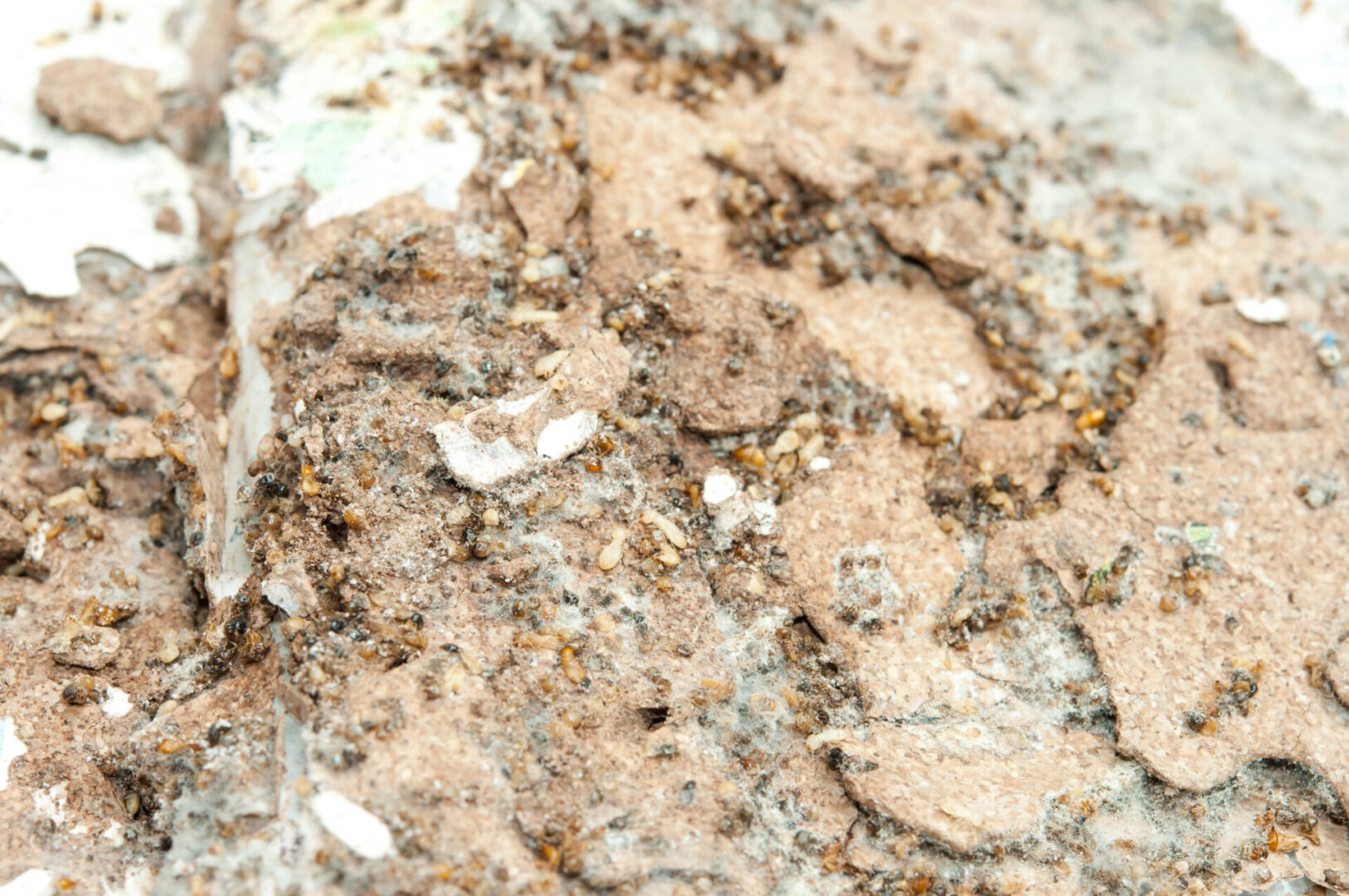
After a swarm ends, termites shed their wings almost immediately, so small piles of matching wings near windowsills or along the floor often point to their presence. These wings tend to look uniform in size, which helps distinguish them from other insect debris. Mud tubes running along a foundation or up an exterior wall are another strong signal. Termites build these narrow tunnels out of soil and saliva so they can travel safely between the ground and the wood they are feeding on, all while staying shielded from the open air.
Damaged or Hollow Wood
Wood that sounds hollow when tapped, or that gives way more easily than expected under light pressure, often means termites have been feeding inside it for some time. This kind of damage tends to stay hidden beneath the surface, since termites rarely tunnel all the way through to the outside. That hidden nature is part of why the damage can go unnoticed for a while before anyone realizes what has been happening.
Doors and windows that suddenly stick, or paint that starts to bubble along a wall for no clear reason, can sometimes point to moisture trapped by tunneling activity underneath. These signs are easy to overlook on their own, but taken together with the other clues in this section, they help paint a clearer picture of what might be going on inside the walls.
Limited Visibility
Termites spend most of their time inside wood or soil, away from open air and daylight. Aside from a brief swarming period once or twice a year, they stay out of sight almost entirely. That means a lack of visible activity does not always mean a home is free of them, which is exactly why the other signs carry so much weight.
Signs You May Have Flying Ants
Flying ants behave quite differently from termites, and their presence is usually much easier to confirm without any guesswork.
Swarms Near Light
Flying ants tend to gather in clusters around outdoor lights or bright windows during their mating season, drawn in by the glow, the same way many flying insects are. These swarms are often brief, lasting only a short window before the group scatters and settles elsewhere. A porch light left on during the right stretch of evening can sometimes attract a surprising number of them within a matter of minutes.
Visible Outdoor Colonies
Unlike termites, ant colonies are often easy to spot outdoors. Bare patches of soil or a mulch bed near the house tend to be common gathering points, and garden borders where the ground stays soft can attract them as well.
Watching where the insects come and go over a short stretch of time can help confirm that a colony is nearby without needing to dig anything up.
No Wood Damage
Since ants do not eat cellulose, they will not hollow out beams or weaken structural wood the way termites do. Regular indoor sightings can still happen if food sources are available inside the home, but the underlying cause is completely different from a termite problem, and it usually points to something as simple as an open pantry item or a spill left uncleaned.
Why Correct Identification Matters
Knowing which insect you are actually dealing with changes how seriously the situation should be treated, and it shapes the response that makes the most sense. A few minutes spent checking the details can prevent a lot of unnecessary worry, or a lot of unnecessary spending, depending on which insect turns out to be the culprit.
Termites and Structural Risk
Because termites feed on wood, an established colony can slowly weaken the structural parts of a home over time, from support beams to flooring. The damage often builds gradually, which makes early identification especially useful for catching a problem while it is still manageable.
Flying Ants and Minimal Impact
Flying ants swarm briefly to mate and start new colonies elsewhere, but they do not feed on wood or building materials in the process. Their presence around a home is usually more of a short-lived nuisance than a lasting concern, and most sightings resolve on their own once the swarming period ends and the group moves on.
The Cost of Misidentification
Treating an ant swarm as though it were a termite problem, or the other way around, often leads to wasted time and unnecessary expense. Getting the identification right from the start helps homeowners choose the correct approach, whether that means simple ant pest control(opens in new tab) for a minor nuisance or a closer look for a possible termite issue that needs more attention.
Steps Homeowners Can Take
A few simple actions can help clear up any confusion once a swarm appears near a home.
Examine the Insect Closely
Collecting a sample insect or taking a clear photo makes it much easier to compare the waist shape against the antennae and wing length. Holding the photo next to a reference guide, or simply reviewing the traits covered earlier in this article, often settles the question right away without much extra effort.
A magnifying glass can help if the insect is small or if the lighting is poor, though it is rarely necessary. In most cases, a steady hand and a well-lit photo taken from a couple of angles will show everything needed to make a confident call.
Reach Out for Professional Help
If the signs point toward termites, contacting a professional is usually the safest next step rather than waiting to see what happens. Termite control services(opens in new tab) can confirm what is actually happening inside the walls or foundation and recommend the right course of action from there. A trained eye tends to catch details that are easy to miss during a quick homeowner inspection.
Once a colony is confirmed, the next step usually moves toward treatment. Termite removal(opens in new tab) performed by trained technicians tends to address the issue more thoroughly than home remedies alone, since it targets the colony itself rather than just the insects that happen to be visible on a given day. Waiting too long to make that call rarely changes the outcome for the better, so it usually pays to act once the signs start pointing in one direction.
Watch for Seasonal Patterns
Flying ant swarms tend to appear during warm, humid stretches of the year, often after a rain shower has softened the ground. Termite swarms follow their own seasonal rhythm as well, and noticing one can sometimes signal a nearby colony that has been active for a while. Paying attention to timing, along with the physical traits already covered, gives homeowners a fuller picture of what they are actually seeing in the yard or near the porch light. Keeping a rough mental note of when a swarm happens each year can also make it easier to recognize a repeat pattern later on.
Conclusion
Flying ants and termites may look alike at first glance, but a closer look at their antennae and body shape, along with their wings, offers a clear way to tell them apart once you know what to check. Termites carry a greater risk to the structure of a home, while flying ants are usually a short-lived and manageable nuisance that clears up on its own. Taking a closer look or reaching out for guidance when something feels uncertain helps homeowners respond with confidence instead of guesswork, and it often saves both time and money in the long run.
Contact our team(opens in new tab) today if you would like help identifying a swarm around your property.
Frequently Asked Questions
Can flying ants and termites appear in the same season?
Yes, their swarming periods can overlap depending on the region and the weather that year, which is part of why the two get confused with each other so often. Paying attention to the physical traits covered earlier is usually the fastest way to sort out which one you are looking at.
Do flying ants ever come back indoors after a swarm?
They can, especially if food or moisture draws them inside, but their presence indoors does not point to structural damage the way termite activity does. A tidy kitchen and dry basement usually go a long way toward keeping them from lingering.
Is it normal to see only a few flying insects instead of a large swarm?
Yes, smaller groups happen too, and the size of a swarm is not a reliable way to tell the two insects apart.
How long does a swarm usually last?
Most swarms wrap up within a short period, often just part of a single day, before the insects settle into a new location or return underground. Weather conditions can shift that timeline slightly from one year to the next.
Should I try to treat a swarm myself before calling anyone?
It depends on what you find. A small ant swarm outdoors rarely needs anything beyond basic cleanup around the area, but anything that looks like it might involve termites is worth having checked before attempting a fix on your own.

Tags: